
Claude + ChatGPT Long Code Hack: How I Bypassed the Code Gen/Token Limit Without Using Cursor

If you’ve ever tried getting long code outputs from ChatGPT or Claude, you’ve likely hit the same wall: token limits. They stop midway and say they can’t continue. If you're not using tools like Cursor, it can be frustrating.
Here’s the best workaround I found while working on a complex project—no extensions, no plugins, just smart prompting.
The Scenario
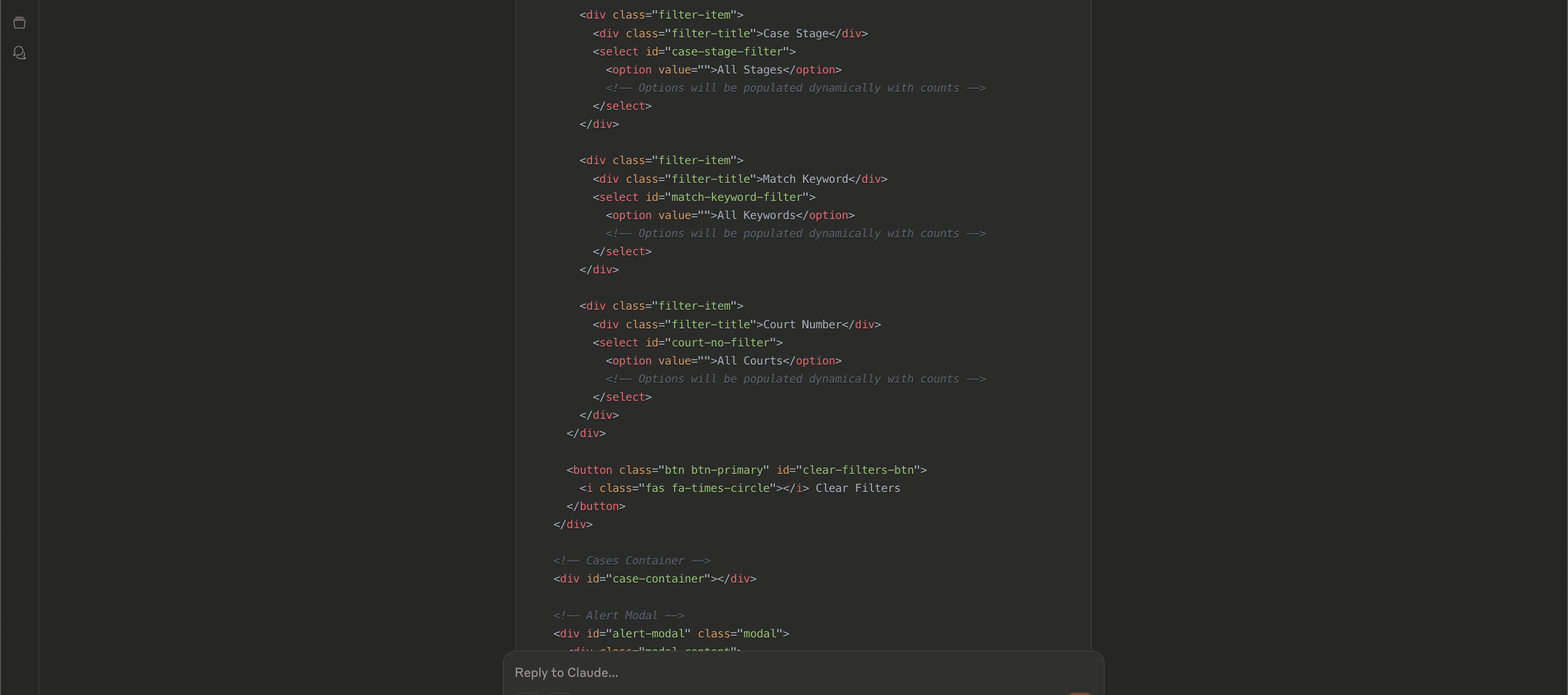
I was dealing with a large frontend codebase—over 2,000 lines of HTML, CSS, and JavaScript. Claude refused to give me the full code in one go due to the limit.
The Hack
Step 1: Strip Down to HTML & JS Only
I pasted the entire code into Claude and asked:
"Remove all the CSS and give me just the plain HTML and JavaScript. No artifacts."
It worked—Claude returned clean, unformatted plain text that was easy to copy and manage.
Step 2: Make Iterative Changes Without Losing Context
Next, I prompted for changes:
"Add form validation and a modal—use plain code only."
When Claude hit the limit and I nudged it with “Continue,” it resumed about two lines above where it stopped. No missing logic. No weird breaks.
Step 3: Bring Back the Styling
After the full HTML and JS were finalized, I pasted them back in and asked:
"Give me clean, responsive CSS for this."
Claude generated solid, usable styling that fit right in.
Why This Works
Both Claude and ChatGPT handle plain text better for long outputs.
Asking for "no artifacts" avoids formatting that consumes tokens.
The “Continue” prompt works more reliably since it resumes smoothly from the last output.
You get full control over the logic and styling phases separately.
Pro Tip
Avoid asking for Markdown or formatted output. Instead, use a clear prompt like:
"Give me plain code. No artifacts or formatting."
This is especially effective if you're not using tools like Cursor.
This method has saved me hours of back-and-forth and made it easy to get full working code from large prompts. If you're working with big projects and hitting LLM limitations, give this approach a try.